4Runner Car Camping Setup: Full-Size Sleeping Platform
- Mar 24
- 6 min read
Updated: Apr 10
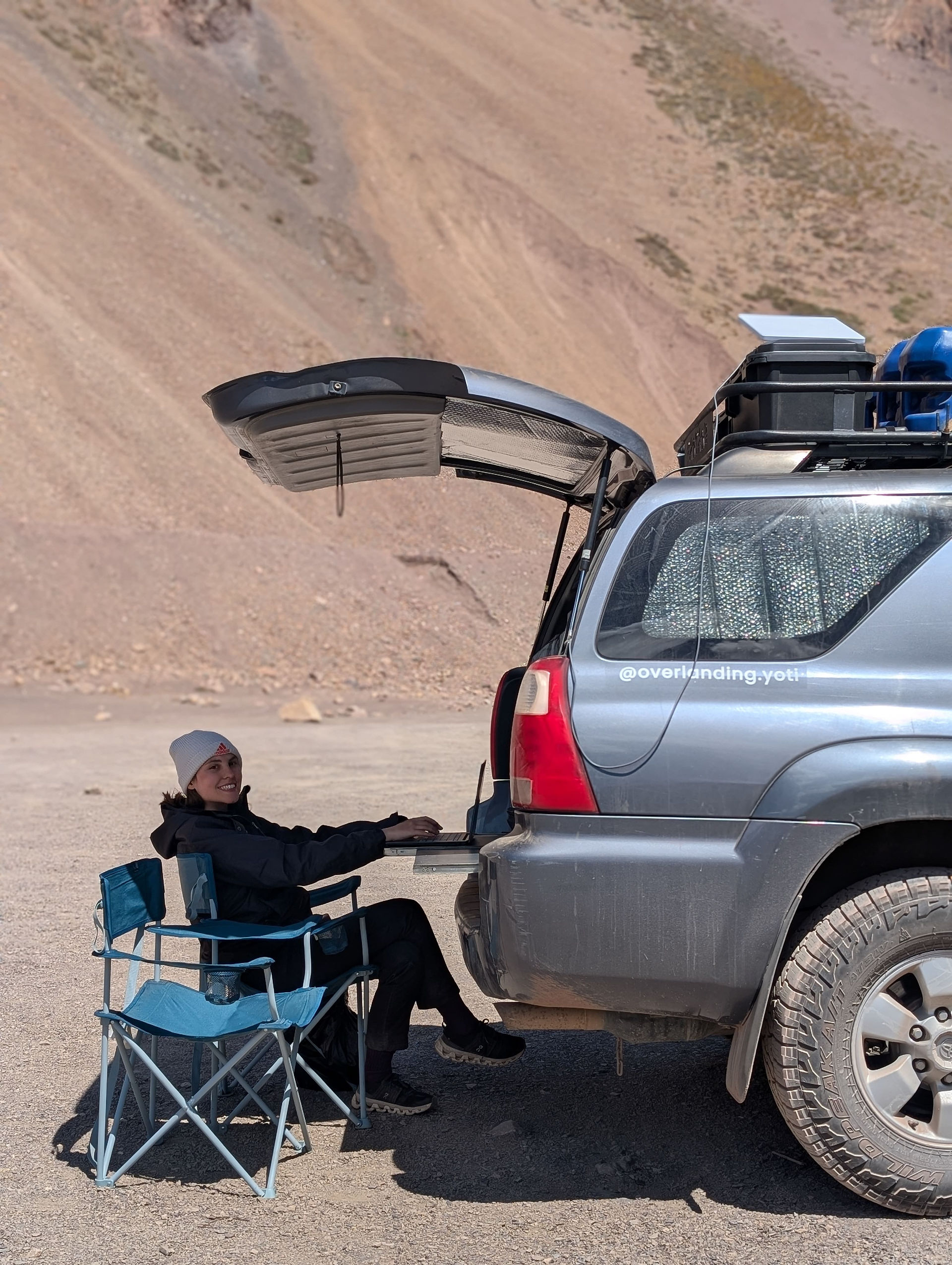
When looking to take on the Pan-American Highway, driving from Ushuaia to Alaska, we wanted a budget overland vehicle. After searching the market we quickly discovered the words budget and overland don't go very well together, however we think our 4Runner car camping conversion turned out to be the perfect, simple, reliable and budget-friendly 4x4 rig. We can sleep comfortably, cook easily and it will take us anywhere. Although it's hard to believe, it also has a fully off grid electrical system allowing us to work on the road.
In this post, we’ll break down our full 4Runner car camping setup including what’s worked well, what hasn’t and how you can create your own DIY adventure rig on a budget! Something we wished we had read before living on the road in our car camping conversion.
Before we get into the details, here is a diagram of our 4Runner bed platform:

Watch the Video
4Runner Bed Platform
At the heart of the design is the single goal: achieving a full-width and full-length bed platform that sits just above the wheel arches to maximise usable space. Underneath the platform is a storage goldmine, with two large drawers out the back, two pull-out tables and a full-width shelf in the front. The height you choose for your 4Runner sleeping platform will affect your drawer height and should be chosen with your water jerrycans in mind.

One of the biggest decisions that will shape your build is whether to remove the back seats or not. We cover the option of keeping the seats later in the post, however we’ll walk through our design in the most detail. As we’re living in it full time and overlanding from Argentina to Alaska, we needed to maximise storage for all of our clothes, fishing gear, spare parts and more therefore the seats are removed.
The infographic below shows a view of the shelf, bed frame, pullout drawers & tables:

4Runner Kitchen
Next lets walk through the kitchen setup and how we store our water. In the visualisation of the two pull-out drawers, you might’ve already noticed one is larger than the other, this is because the larger one is home to our kitchen.
Everything we need to cook, clean and eat belongs here including roughly a week's worth of dried food. The drawer is divided with storage containers to keep things organised and easy to access. Our kitchen gear includes:
Doite Camping stove
IKEA nested pots and pans
Plates, cutlery, kitchen utensils
Camping Gas Canisters & Bottles
We also have the 20L Alpicool Fridge which is chest opening and sits on a small wooden platform behind the drivers seat. These are great options for car camping as the Eco mode means they pull less power and the chest opening let's less cool air out.


Water System
One of the most essential parts of any off-grid setup is water, yet many car camping conversion designs seem to treat this as an afterthought and fit their water retrospectively. In our build, the height of our sleeping platform is the exact height of our water jerry cans. This allows us to carry:
2x 25L Jerrycans of water
6L bladder which we keep under the passengers feet for filtered drinking water
For water filtration we use:
4Runner Sleeping Platform


We chose a thick mattress topper from IKEA with pillows and a duvet due to our full time travel on the Pan-American Highway. However you could use a blowup mattress, homemade foam or pad with sleeping bags instead. We chose less headroom to have a more comfortable nights sleep and we’re glad we did, sleeping in our 4Runner is better than our double bed at home!
Electrics
Perhaps one of the most absurd features of our car camping setup is the electrical system. Our choice of components allow us to comfortably power Starlink Mini as well as charge phones and laptops. While many overlanders opt for a simple Jackery or EcoFlow power unit, we have a fully off-grid power system with the following:
Solar Panel & Victron MPPT & Bluetooth Connector - to charge via the sun
150ah Gel Battery - to hold enough charge for weeks
Victron Pheonix Inverter - to charge 240V appliances such as laptops
Victron SmartShunt - to measure the state of our system
DC-to-DC Charger - to allow us to charge while driving

4Runner Exterior: Roof Rack & Extra Storage
When car camping, every inch of space and storage matters, so we’re super glad we have our roof rack. The basket style rack also means that we can use more generic hardware store attachments compared to the slimline expensive racks such as FrontRunner where you need custom accessories. We have the following mounted on our roof:
Starlink Mini - game changer for internet on the road! Get one month free here!
Recovery Shovel - for digging us out of the sand, mud or snow
Awning - for shade in the Chilean desert!
3x 20L Petrol Jerrycans - for extra fuel on the long 4x4 tracks
2x Storage Boxes - for bits and bobs that don’t need to be in the truck

4Runner Camping Climate & Comfort
How do we stay warm while car camping? From -12°C to 40°C along the Pan-American Highway we will see pretty much every temperature and climate possible, from the snowy mountains in Patagonia to the Chilean desert and Central America's tropical heat.
Insulated window covers are essential in all of these climates. Whether it's swelteringly hot outside or freezing, the insulated foil window covers we use keep the heat out or in. These are absolutely essential for overland travel and while we handmade some budget options in Chile, just cutting windscreen templates to our side-window templates, we also have a guide for some nicer car camping window cover designs.
To stay warm we:
Wrap up with thermals
Have our duvet
Hats, Snoods and Gloves!
And a hot water bottle each
To stay cool we have:
Use wet flannels
In the process of looking for 4Runner window vents
Just a bed sheet
Gear & Accessories
Our full list of recommended gear and accessories is coming soon! Stay Tuned.
Storage
The more boxes, packing cubes and organisers in the car the better! Anything loose will get lost in the abyss and we love the organisers from IKEA to keep our clothes tidy as well as packing cubes for handy things down the end of the bed.
As we mentioned at the beginning, overlanding gear can be super expensive and while we wanted Molle Panels for our back window storage, we opted for IKEA desk storage boards instead and added the custom baskets/shelves seen below.


What Would We Change?
Things we would love to upgrade but are nice to have and not essential:
Overlanding 4Runner Snorkel
4Runner Suspension Upgrade (Bilstein 5100’s)
Rear Door Tyre Carrier, Upgraded Gas Struts and a Trasharoo Bin Storage
Small 2-3kg Gas Bottle for cooking instead of the gas bottles
The wooden inner wall storage component pictured above
Removing the seats as a design decision will dramatically affect how much storage you have, however we completely understand most people want to keep their cars for daily run arounds.
This design is completely do-able while keeping the back row of seats in, with the following changes:
The 4Runner sleeping platform will need to be slatted so that it can slide into the full-length position
The platform support legs will sit on top of the folded down seats

Outro
Our 4Runner car camping setup isn’t perfect, it's built to work and so far it has worked a charm on the Pan-American Highway. Our design has evolved on the long days on the road from the cold days in Ushuaia, rain in Patagonia and heat of Chile.


If there’s one takeaway from this build it's that you don't need to break the bank to have an overlanding rig. So many people get the insanely expensive pop-top roofs and the most expensive overland gear on the market but forget to adventure, instead spending years of paychecks to build the rig, instead of exploring in it.
Hopefully this guide gives you the confidence and design idea to create your own car camping conversion, for a weekend or a year! If you have any questions about the build or want to see how it performs on the road, feel free to reach out to us and follow our journey from Ushuaia to Alaska on Instagram.
We also break down our monthly travelling costs here!


.png)


Comments