How To Buy A Car In Chile As A Foreigner: To Drive The Carretera Austral, Patagonia or The Whole Pan American Highway 2026
- Dec 17, 2025
- 9 min read
Updated: Jan 5
Buying a car in Chile seemed like the perfect way to make our adventure a reality. The only problem… We're foreigners.
The logistics of buying a car in another country sound complicated, and in some places they are. But as it seems luck was on our side, Chile is one of the easier countries to purchase a vehicle as a foreigner. Here’s exactly how we did it, step by step!
Our plan was to buy in Santiago, drive down one of the best roads in the world, The Carretera Austral, reach Ushuaia and then turn around and head all the way up to Alaska along the Pan American Highway! Although this guide is also perfect for people who want to buy a car to roadtrip South America, our friends are doing just that with a car they bought in the same way.
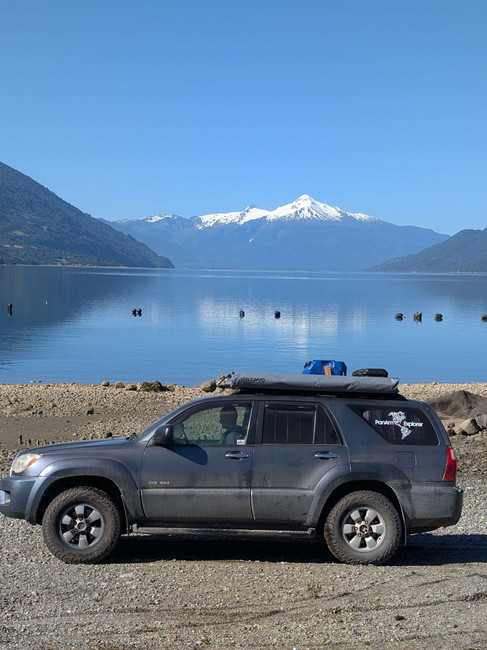
That leads me to how we did it. We bought a Toyota 4Runner with Chilean plates through a middle man that deals with all the paperwork. They help you obtain a RUT (Rol Unico Tributario), the key to buying the vehicle as well as with insurance, tax and all the other niggly bits that would be confusing and near impossible without good Spanish.
In Santiago there are three companies we found that help tourists buy a car in Chile. With varying reviews we chose Suzi Santiago (CTW), not to be confused with the other Suzi!
Below we detail the process of how we bought our car (named Yoti). We share the full experience from viewings, paperwork and logistics of crossing borders.

Preparation
There are several companies who help tourists buy cars in Santiago, Chile. We recommend looking at all three websites: OverAndes, Suzi Santiago, Suzi CTW and making a list of all the vehicles you like before you hop on your flight to Santiago.
In England we contacted all three companies to get some advice and learn about the process of buying the vehicle.
We knew we wanted a 4Runner and this meant Suzi CTW was our main choice as they had 4 or 5 we could view.

We sent over an email detailing the time we would arrive in Santiago and set up a meeting to get rolling with the paperwork (more on this below) and view the 4Runners they had in stock. They also have different packages available depending on whether you want to view other cars or just buy one from their stock.
Once you’ve decided which company is the best fit for you, book accommodation near their office. OverAndes is located a little outside Santiago so you will need to use Uber if you stay further in the centre. Suzi’s CTW cars are also stored outside Santiago (about a 20 minute Uber) but their office is pretty central and walkable if you choose to stay near. We stayed at Hostal Providencia which was a 40 minute walk away.
Viewing Cars In Chile
It is a good idea to view a few cars or vans. As with buying a vehicle anywhere you will want to view and test drive it first. This is essential when buying a car abroad as well, it may highlight problems that can’t be seen online.
For example when we drove Yoti for the first time the back door kept swinging open, not ideal and we requested this was fixed before we purchased her.
The cars from these companies are all past travellers, not new and all with a few bumps and scraps, a little history we like to think. However, if you would like to view cars you’ve found on Facebook Marketplace or from dealerships Suzi CTW can help with this too.
We viewed one car from Facebook Marketplace and Suzi CTW sent Carlos the mechanic to the viewing with us to once over the vehicle. In the end we decided it was a pimped up turd and we left without even test driving it!


The Paperwork
The first thing you want to do (before even viewing the cars) is to get your paperwork rolling. This is because to obtain the RUT (a Chilean ID and tax number) it takes a few days.
You cannot buy a car without a RUT. The day after we landed we headed straight to Notaria to meet Fabiola (Suzi CTW’s administrator) to get the ball rolling.

When we arrived we had to pay for the RUT (~6,000 CLP) and sign one document. The documents are all in Spanish so we recommend using the photo feature in Google Translate. You will also sign and fingerprint the paperwork.
Once your RUT has been processed you’re all good to go ahead and buy a vehicle.
You will need to transfer the money (most likely in CLP). We recommend using Revolut or Wise for this transfer.
Then you will need to return to the Notaria and finish off the paperwork, which includes insurance, tax and a document saying you will return the car within a year if you take it abroad. If you violate this you will be fined $70, it doesn’t matter how long it’s been out the country it is still $70.
To buy the car the documents you need include your RUT, passport and cash for the taxes. This includes:
1.5% of the sale price
36,000 of the civil registry tax
50,000 of the notary tax
You will also need to pay 80,000 for the border crossing paperwork, this can be paid by car unlike the other fees above.
Paperwork You Need
RUT
Insurance
Tax
Permiso de Circulación
Poder
Padron
This is where it gets a little confusing. When you transfer a vehicle title in Chile it can take up to three months to update the Padron (proof of ownership). For us it only took one month but this is not always the case! Therefore, until you get your Padron you travel with the last persons Padron and a Poder (power of attorney) that says you can drive the car across borders.
RUT
This is a Chilean ID number, and used to buy the car. You will see RUT used everywhere as an identification method.
Tip: If you enter your RUT at the supermarkets it unlocks all the deals as well!
Insurance
The minimal insurance required for Chile is SOAP and it is renewed each March. If you plan to cross borders you need SOAPEX which covers the MERCOSUR countries, Argentina, Uruguay, Brazil and Paraguay. For other countries you’ll need to buy insurance on arrival, usually at the border crossings, just be careful of scams.
Permiso de Circulación
The Permiso de Circulación is an annual vehicle tax paid in March. The cost varies based on your vehicle's age, weight, and engine size. If you buy your car outside of March, the previous owner should have already paid for the current year. Keep the receipt in your vehicle as proof of payment, sometimes you'll need to show it at checkpoints.
Revision Tecnica
This is similar to the UK’s MOT and checks the safety of the vehicle. It needs to be done once a year and can be done up to a month before it expires. The inspection needs to take place at an official centre called a Planta de Revision Tecnica.
Padron
This is the ID card showing ownership of the car. It can take up to 3 months for the Padron to be updated into your name. If you buy through a company, you can grant them Power of Attorney to collect your Padron which they will email to you.
Then you need to print your Padron, and ideally laminate it as it will be shown at police checkpoints and border crossings.
Poder
Until your Padron comes through with your name updated as the legal owner you will carry a Poder. This is a power of attorney allowing you to cross borders under the name of the last owner. At the border the officers will keep the Poder, so make sure you have enough copies.
What Does It Cost to Buy a Car in Chile as a Foreigner?
Based on our experience, here's what you should budget:
One-Time Costs of Buying a Car in Chile as a Foreigner:
RUT application: ~6,000 CLP (~$7 USD)
Transfer tax (1.5% of sale price): varies
Civil registry tax: 36,000 CLP (~$40 USD)
Notary tax: 50,000 CLP (~$55 USD)
Border crossing paperwork: 80,000 CLP (~$90 USD)
Service fee (if using a company): $200-500 USD typically
Annual Costs:
SOAP insurance (for Chile): ~30,000-50,000 CLP (~$35-$55 USD)
Permiso de Circulación: 150,000-250,000 CLP (~$170-$280 USD)
Revisión Técnica: ~30,000-50,000 CLP (~$35-$55 USD)
Planning Your Trip & Your Roadtrip
Crossing Borders With A Chilean Car As A Tourist
Once you have all your paperwork you’re good to go!
To cross the borders you will need to show your Padron and other relevant paperwork. As mentioned above if you cross a border before your Padron has been updated you also need a Poder which states you can cross the border with the car. At the crossing they will take the Poder away, so be sure you have enough copies with you.
So far our border crossings have been smooth! Just make sure you have receive your Temporary Import Permit before heading off.

Paying Chile’s Road Tolls
There are two ways to pay road tolls in Chile. The first is with a TAG device. This is an electronic transponder that attaches to your windshield and automatically charges tolls as you pass through.
If you don't have a TAG you can pay online at PasasteSinTag. However…. If you don’t have a Chilean Bank account it nearly always doesn’t work. This is okay for south of Santiago when you can slide right and pay manually.
If you do however drive in Santiago without a tag you will have to pay online. We managed to pay some of our tolls at the UNIMARC red counter. These have to be paid in cash and not all our tolls showed up.
Therefore we had to contact Suzi CTW to help. They pay your toll fee with a 20% service charge on top. The other option would be to use a friend or local with a Chilean bank account.
Note: Santiago’s tolls are expensive. We didn’t realise quite how expensive with all our trips to Ikea we managed to rack up over £150!


Selling Your Chilean Vehicle
The easiest way to sell your vehicle is back in Santiago with the company you bought it from. They will often take a percentage of your sale. Some companies will give you free storage while others are paid.
There is also the possibility of remote transfers. This is most commonly done in Colombia. It is the same process and takes about 2 weeks. You will probably need a buyer lined up to do this.
As for the United States and Canada, in theory it is the same process but of course it’s not often done. Therefore we will update this blog once we’ve worked out what to do!



Frequently Asked Questions
Can I buy a car in Chile without speaking Spanish?
Yes! The companies like Suzi CTW, OverAndes, and Suzi Santiago handle everything in English.
What if I want to take the car away from Chile for longer than a year?
You'll need to renew the temporary export permit or return the car to Chile briefly. The fine for overstaying is only $70 USD, but technically you're supposed to comply.
Can I sell the car outside of Chile?
Yes, remote transfers are possible (commonly done in Colombia), but you'll need a buyer lined up. The process takes about 2 weeks and the company can facilitate it remotely.
What happens if the Padron hasn't arrived when I want to sell?
You can still sell with the Poder system - the same way you bought it. The new buyer will receive a Poder while waiting for their Padron.
Is it better to buy from a company or privately?
Companies charge service fees but handle all bureaucracy and speak English. Private purchases are cheaper but require excellent Spanish and knowledge of Chilean systems. For most tourists, companies are worth the extra cost.
Top Tips For Travelling Chile
Travel by Campervan - This is the best way to explore Chile's diverse landscapes! For longer trips, check out Suzi CTW - a brilliant concept where you buy a campervan, do your journey, then sell it to another traveller.
Pack for All Weather Conditions - Chile's climate varies dramatically from the Atacama Desert to Patagonian winds. Invest in quality layered clothing and waterproof gear.
Seek Out Off-the-Beaten-Path Destinations - While Torres del Paine and San Pedro de Atacama are stunning, don't overlook lesser-known gems like the Lakes District's hidden villages, Chiloé's mystical islands, or the Conguillo National Park.
Embrace the Adventure - Chileans are warm and welcoming people who love sharing their country's beauty. Don't be afraid to ask for recommendations or chat with locals - you'll discover the best picadas (local eateries) and secret spots that no guidebook mentions!
Travel Tools To Help You Plan
These are some of the travel tools we love and use daily, by booking through our links you support our blog and help us grow, thank you.
Thank you for reading and enjoy your Chilean adventure. Reach out to us over on Instagram @KateandMikesTravels. We always love to hear from people who read our blogs!


.png)
