Rio Baker Rafting: Why Puerto Bertrand Is Chile's Best Kept White Water Secret
- Dec 3, 2025
- 9 min read
Updated: Dec 12, 2025
Rio Baker rafting was one of our favourite (and most exhilarating) adventures during our time in Chile. In the heart of Patagonia alongside the Carretera Austral you can find one of the more adventurous activities to add to your itinerary.
The Rio Baker, Chile's largest river by volume, charges through the tiny town of Puerto Bertrand with Class 2 and 3 rapids that'll have you grinning ear to ear while getting absolutely soaked. Fed by Lago General Carrera, the second-largest lake in South America, this completely clear river offers world-class rafting just behind the legendary Futaleufú… but with a fraction of the crowds.
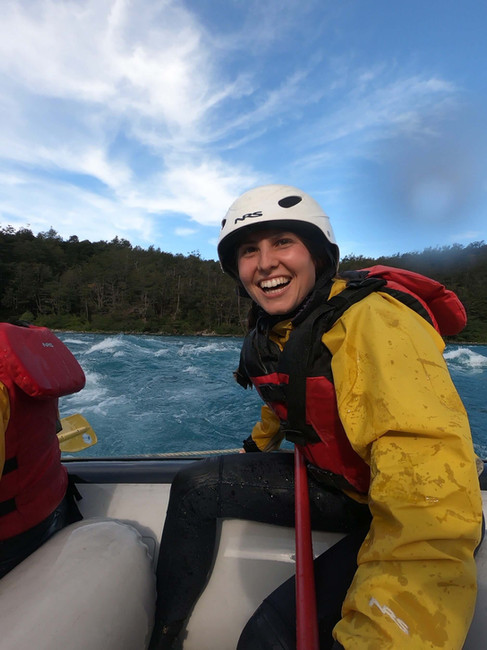
We spent an hour enjoying the river and rapids with names including Caballo Salvaje (Wild Horse) surrounded by lush Patagonian forests, rocky outcrops, and perhaps even condors circling overhead (though you'll be too busy paddling to look up, trust us). With shouts of "¡Adelante!" and "¡Piso!" ringing out, you'll be buffeted by rapids and drenched by Chile's wild force of nature.
But is Rio Baker rafting worth adding to your Carretera Austral itinerary? And what's the experience actually like?
After rafting the Rio Baker with BPA (Baker Patagonia), a brilliant local company focused on sustainable adventure tourism in the Aysén region, we're here to tell you everything: what to expect, how challenging it is, which company to book with, and whether it's worth it.
If you're driving the Carretera Austral anyway, Puerto Bertrand is 1 hour 30 minutes from Puerto Rio Tranquilo (where the Marble Caves are). We did both in the same week, and the Rio Baker rafting was just as memorable as kayaking the caves.
Let's dive in… or should we say, paddle in?

Tip: Want the full adrenaline rush? Claim a front seat! You'll take the biggest hits from the rapids and get absolutely drenched.
Rafting On The Rio Baker
The Rio Baker, a stunning river in Chile is home to both class 2 and 3 rapids. During the activity you travel down 7kms of the Rio Baker with the best rapids at the beginning.
The Rapids
The first rapid is called the Wild Horse (Caballo Salvaje,) a frenzy of towering waves from every which way. It will have you hanging on to the raft's rope and shrieking in enjoyment, exactly as if you were riding bareback on a untamed wild horse! This was the biggest rapid we’d ever descended and you couldn’t wipe the smiles off our faces!
Our guide rattled off names for the other rapids in Spanish while we were bouncing through them, and honestly? Between the thundering water and my dodgy Spanish, I didn't catch most of them, but what I can tell you is that they were all super fun to navigate.
The last section has a static wave called, “The Wall”. Here, as a team you’ll lean into it, splashing whoever is sitting at the front, just remember to keep your mouth closed!


How Does Rio Baker Compare to Other Rafting?
We've rafted before in Kitulgala, Sri Lanka, and the Rio Baker rapids were noticeably bigger and more powerful. The sheer volume of water makes the waves taller and more intense. Plus the glacial colour of the water also makes it an unforgettable experience.
Class 2 vs Class 3: What Does That Actually Mean?
If you're not familiar with rapid classifications, here's the quick breakdown:
Class 2 rapids
Medium-sized waves (up to 1 meter)
Clear channels that are easy to navigate
Some manoeuvring required but pretty straightforward
You'll get splashed
Class 3 rapids
Bigger waves (1-2 meters) and more turbulent water
Requires precise manoeuvring and coordinated paddling
You might take water over the side of the raft
The boat could capsize
How Long is the Rio Baker Rafting Trip?
The time on the water is about 1 hour, covering roughly 7 kilometres of river but the overall experience takes 2 to 3 hours which includes the safety briefing and shuffling to and from the river. At the end of the rapids you will be picked up and taken back to your car.

Is Rio Baker Rafting Worth It?
Having never heard of rafting on the Rio Baker we were unsure whether the tour would be worth it. Now that we've done it we can say it’s definitely memorable, and something we’ll be talking about for years, thanks to the intensity of the rapids and Mike's dodgy translation (see our experience!)
This is a great opportunity to raft along the Carretera Austral if you don’t want to drive the detour to Futaleufú or you don’t have time. It is also perfect for the whole family with manageable waves.

Where Is Puerto Bertrand?
Sitting on the banks of the Rio Baker, Puerto Bertrand is in the Aysén Region of Chilean Patagonia and along the famous Carretera Austral. An unpaved route that is the only road access to this remote region of Chile.
Puerto Bertrand is extremely remote and only worth visiting if it’s part of a bigger road trip exploring the southern highlights of Chile.
We made our way down from the Marble Caves, visited Chile Chico and the top section of Patagonia National Park (the drive here itself is worth it!) before heading to the Rio Baker and rafting.
How To Get To Puerto Bertrand?
If you’ve committed to driving the 1,240 km of the Carretera Austral then you’ll pass through Puerto Bertrand and along the stunning Rio Baker! Don’t rush this section, there are some great park ups right on the river and we’ve heard it’s great for fishing.
There are a few tour companies in town but we recommend BPA. We met them at their office where they supplied us with all the gear!
We didn’t take the bus, and truthfully we didn’t see many (any) in the town here or along the road.
We heard from fellow travellers that the public transport was quite hard to navigate and in the end you’ll have to end up hitchhiking.

Which Rafting Company To Book?
There are a handful of companies offering Rio Baker rafting trips in Puerto Bertrand, but after doing our research and experiencing it ourselves, we recommend BPA.
Why We Chose BPA (And Why You Should Too)
BPA specialises in adventure tourism with a strong focus on sustainable development in the Aysén region.
We had two experienced guides, one on a safety boat and the other with us on the raft. They were professional, kind and informative! Our guide knew the lines to take through the rapids, told us what was coming up and explained everything in detail.

BPA provided us with everything we needed (great as we live in a car and have limited space). We had a wetsuit to wear as well as a jacket, neoprene shoes, helmet and a lifejacket. We also could put our car keys and spare clothes in a huge dry bag to change into at the end of the rapids.

BPA Contact
You can find them on the main road in Puerto Bertrand (look for their sign), or head to their website Baker Patagonia to book in advance.
Our Rio Baker Rafting Experience with BPA
Having rafted before, we were unsure how different this experience would be, and whether it would be worth it! But… let me tell you, these rapids were unlike anything we’ve ever done and the water tinted by glacial minerals made this the most beautiful river we’ve ever encountered.
We headed to the BPA office and got ready to raft. Wetsuit, shoes, helmet, jacket and life jacket! All the gear and no idea how much fun we were about to have!
After the safety briefing we drove down in our car to the dock, we found this hilarious. Something about driving in a wetsuit, well I guess you don’t do it everyday!

As we launched the rafts, the nerves and excitement grew. Earlier, our guide Damian had gone through the instructions: '¡Adelante!' (paddle forward), '¡Piso!' (get down in the raft), '¡Atrás!' (back paddle), and '¡Alto!' (stop). With 80m to practise our group of 6 had mastered the raft… time to hit the rapids.
The first rapid was in our opinion the best. Waves crashed over the raft, tossing us every which way. With shouts of Adelante we paddled through only to be left grinning from ear to ear. The adrenaline kicked in and we were ready for the second!

By the third rapid we knew what we were doing… or so we thought! This rapid is mellower and you can get into the water while holding on to the raft to float down. Over the rushing water, and a bad translation from Mike, Kate didn’t quite understand not to let go of the rope, this ended up with her floating off downstream thinking it was part of the experience.
Luckily, the safety boat picked her up and it’s now a funny, albeit a little embarrassing story!
The last section of the rapids has a static wave, if you want the full experience make sure you’re at the front. This is where you’ll get the most water splashing you and trust us this one you’re going to get wet!
To finish the tour we jumped into the icy water, warmed by our wetsuits and enjoyed the clear waters and Patagonian mountains before our take out point.
A quick 10-minutes back to Puerto Bertrand and we’d made life-long memories.

Best Time To Visit The Rio Baker
The best time to raft the Rio Baker is during spring, summer and autumn (October - April). You have a better chance of good weather and the water levels are manageable.
We rafted in mid-November and got absolutely perfect conditions, although this was luck! We had blue skies, warming sunshine and nearly zero wind.
As you get into peak season the river becomes busier but you have more chances of better weather… really the best time is when you’re driving through Puerto Bertrand, although you could wait a couple of days if the weather isn’t looking too good.
Rio Baker Rafting Common Questions
How difficult is rafting on the Rio Baker?
It’s not too difficult as you have a team to help paddle, a moderate level of fitness would be fine. You’ll be wearing a lifejacket so even if you’re not the strongest swimmer you’ll be safe.
What to bring rafting?
You don’t need much as all the gear is provided for you, you just need a swimsuit to wear underneath your wetsuit.
Make sure to have topped up on suncream and pack a spare change of clothes and a towel for the end.
We recommend leaving your Go Pro behind, you need your hands to paddle and BPA sent us some great shots and videos afterwards.
How much does rafting on the Rio Baker cost?
With BPA rafting on the Rio Baker costs 45,000 CLP. Check their website here for updated prices.
Do I need rafting experience?
Nope! The Rio Baker is perfect for first-timers.
We'd rafted before (in Sri Lanka), but there were people in our group who'd never been in a raft before, and they had a brilliant time. The guide gives you a thorough safety briefing, teaches you the paddle commands, and gives you 5-10 minutes to practice on calm water before hitting the rapids.
What happens if I fall out of the raft?
It happens, and although Kate didn’t fall out she did let go of the rope! You just need to face forward and point downstream, your guide might throw you a safety rope or as with Kate the safety boat picked her up.
How cold is the water?
It didn’t feel too cold thanks to our wetsuits, but it is glacial melt and sits somewhere between 8-10°C.
Final Thoughts on Rafting the Rio Baker
The Rio Baker river turned out to be a highlight for us along the Carretera Austral, and we hadn’t even heard of it before!
A unique turquoise shade flowing through the Patagonian mountains rafting the Rio Baker was unforgettable (even without Kate’s mishap) and something we’d recommend you add to your road trip itinerary.
If we were planning our trip again, Rio Baker rafting would be non-negotiable on the itinerary. It's Chilean Patagonia's best-kept white water secret, and the experience is pure joy from start to finish.
Convinced? Book a trip with BPA here!
Top Tips For Travelling Chile
Travel by Campervan - This is the best way to explore Chile's diverse landscapes! For longer trips, check out Suzi CTW - a brilliant concept where you buy a campervan, do your journey, then sell it to another traveller.
Pack for All Weather Conditions - Chile's climate varies dramatically from the Atacama Desert to Patagonian winds. Invest in quality layered clothing and waterproof gear.
Seek Out Off-the-Beaten-Path Destinations - While Torres del Paine and San Pedro de Atacama are stunning, don't overlook lesser-known gems like the Lakes District's hidden villages, Chiloé's mystical islands, or the Conguillo National Park.
Embrace the Adventure - Chileans are warm and welcoming people who love sharing their country's beauty. Don't be afraid to ask for recommendations or chat with locals - you'll discover the best picadas (local eateries) and secret spots that no guidebook mentions!
Travel Tools To Help You Plan
These are some of the travel tools we love and use daily, by booking through our links you support our blog and help us grow, thank you.
Thank you for reading and enjoy your Chilean adventure. Reach out to us over on Instagram @KateandMikesTravels. We always love to hear from people who read our blogs!


.png)

Comments